
REK - Humanoid Robot Piloting and Simulation
REK - Robot Platform
Client: REK
Events: REK0 (San Francisco, 2025), REK America (USA tour), REK1 (San Francisco, February 2026), REK Tokyo (2026)
Apps and R&D: REK Sim (the multiplayer simulator, on Steam and Meta Quest), REK Fighter (the pilot's VR app), REK Spectator (R&D around the audience view)
In short
REK puts real people inside humanoid robots - piloting them in real time at live events. The challenge is making that feel immediate and legible to both the pilot and the audience, while keeping the system safe and reliable enough to run in front of a crowd.
That now runs in two places: the robots themselves, and a multiplayer simulator anyone can download. The first championship weekend in the sim drew 3,670 matches from players around the world, and the winner earned a trip to San Francisco to pilot the real thing at the next event.
We’re supporting REK on the software and systems side, helping turn experimental robotics into a reliable live experience: VR and gamepad piloting, mixed reality interfaces, AI-augmented spectator cams, end-to-end latency reduction, event-ready tooling, and the simulator that trains the pilots.
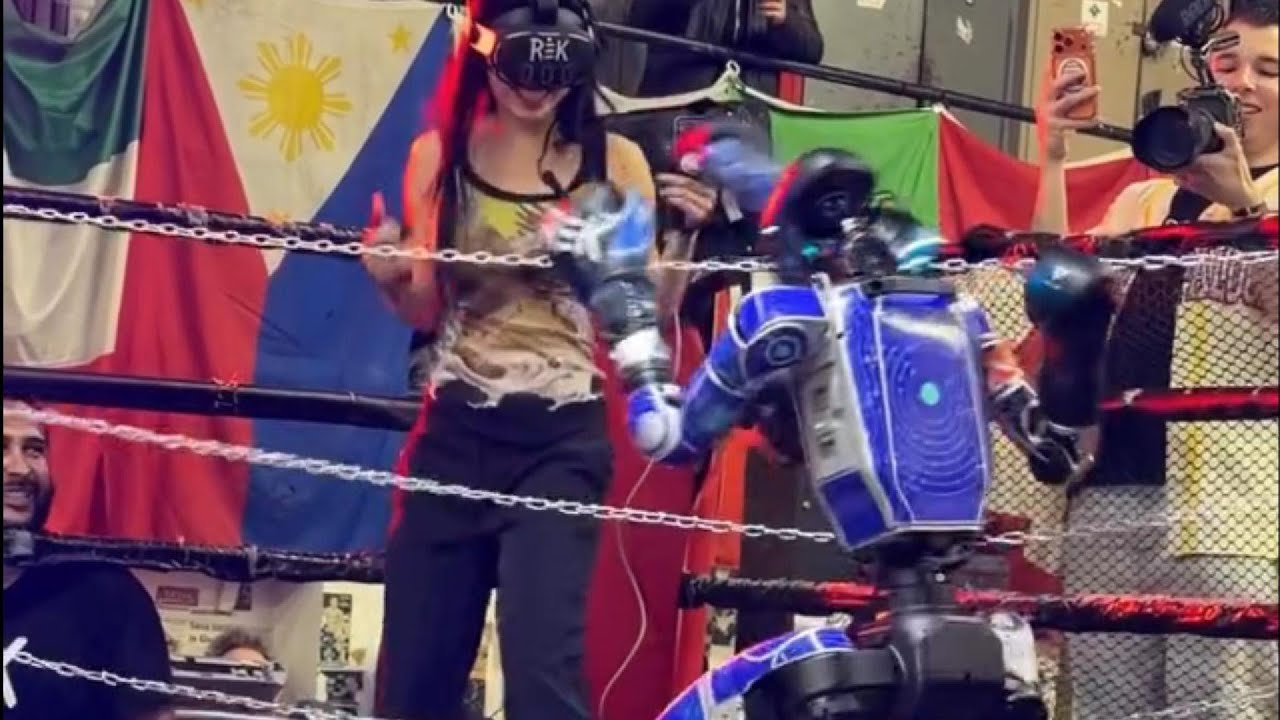
Pilot in VR, robot in the ring. The core REK setup - a person in a headset ringside, their movements translated into robot motion in real time.
What is REK?
REK pilots control humanoid robots at live events in real time - in VR or on a gamepad. The robots are not autonomous: the only AI involved is the trained balance system keeping them upright while a person drives. The format opens up an interesting question: what does it feel like to be inside a robot body, and how do you make that experience both controllable and watchable?
It has grown quickly: REK0 in San Francisco in 2025, a tour across the USA, the tournament-scale REK1 in February 2026, and then REK Tokyo. The next event is back in San Francisco, on T800 robots.
The challenge, and our part in it
Getting a humanoid robot to move is one problem. Making that movement feel immediate and legible - to the pilot wearing a headset and to the audience watching - is a much harder one. Add a live show environment and the bar rises again: piloting has to be intuitive under pressure, response times short and predictable, sessions stable and repeatable, and the whole thing safe around large humanoids moving fast.
We’ve been part of the REK team from day one, working remotely from the UK. The very first robot experiments - on an H1 - were just us and REK’s founder, Cix Liv; since then the team has grown considerably and the work is a shared effort spread across the US, Portugal, India and here in the UK. Our focus has been bridging real-time / game-engine approaches with live production reliability and robotics constraints, including networking, UX, telemetry, and tool-building.
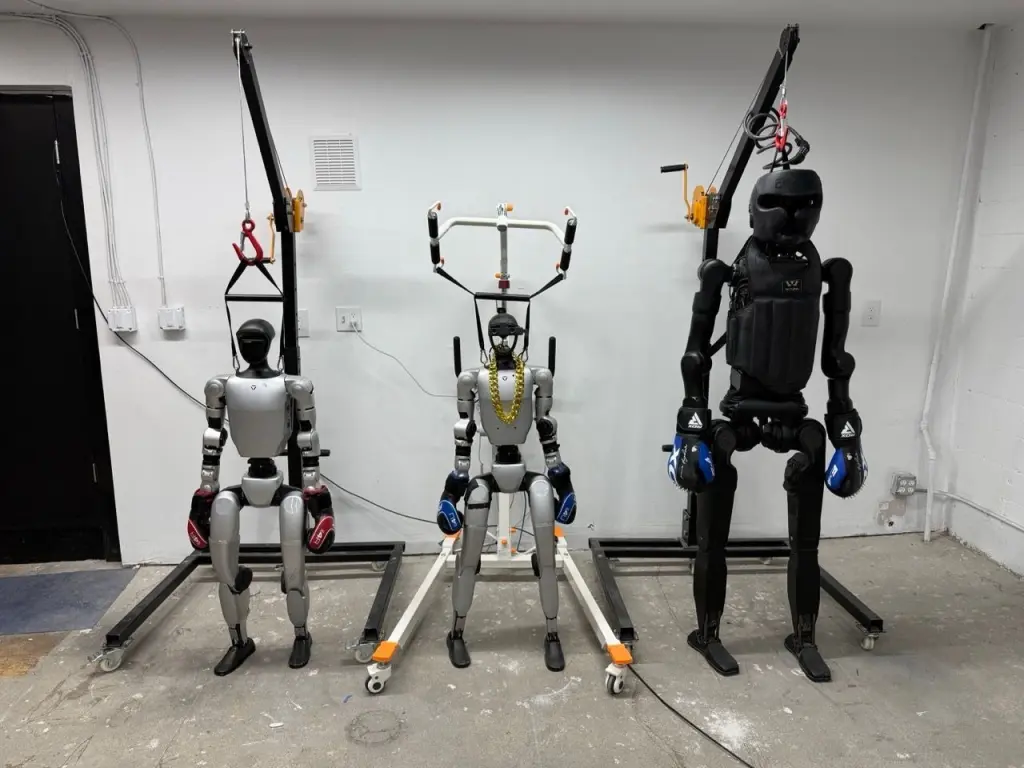
Hardware iteration and show prep: the practical realities of building something that has to run reliably in front of a crowd.
Building the robotic "reflex arc"
In biology, a reflex arc is the fastest neural pathway - stimulus to response with minimal delay. That's exactly what we've worked on for REK: the tightest possible loop between pilot intent and robot action.
What we did
Across R&D and live events, the work has centred on tightening that loop - making the pilot experience readable and responsive, while keeping the overall system robust for show conditions.
- VR piloting and mixed reality app - for triggering, managing, and monitoring actions
- Latency reduction - optimisation across the pipeline to tighten response time from pilot intent to robot motion
- Hybrid control approach - combining pilot intent with the robot's own trained motion, which the team are working on for balance and punch quality
- Event tooling - spectator views, calibration workflows, and operational support for live shows
- Multiplayer simulator - client, networking, and pilot controls, built with the wider REK team
- Game server and backend - the match simulation, matchmaking, scoring, and the championship ladder
From experiments to live events
Early work explored a range of teleoperation techniques and prototypes, quickly surfacing the real constraints: safety, balance, reliability, and the importance of a readable “motion language” for an audience. REK0 was the key proof point: two robots, live crowd, VR pilots, and an entertaining audience experience. It also produced a clear improvement list for the next milestone.
REK1 scaled it up - a tournament at the historic Kezar Pavilion, San Francisco, the night before the Big Game, where anyone with a ticket could apply to pilot a robot. Bigger crowd, wider pilot intake, higher production value. For us it was the next round of iteration: tightening responsiveness, improving the pilot experience, and making the system more robust under show conditions. REK Tokyo followed, taking the format overseas - and going down well enough that one robot made an unplanned escape from the cage.
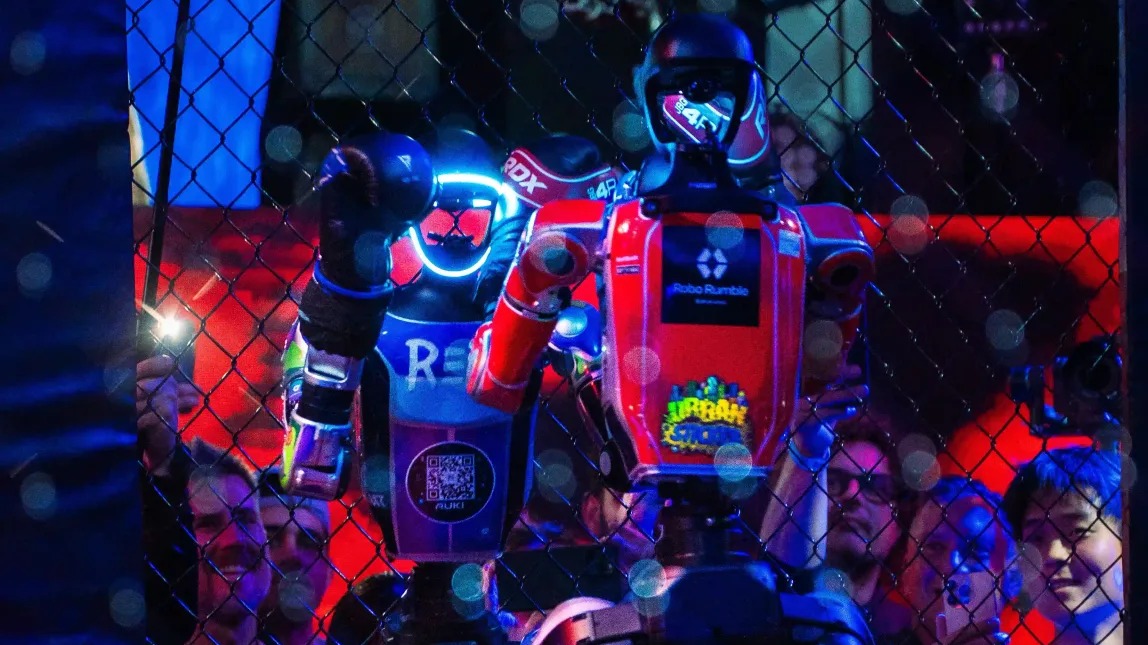
Ringside at a REK event - sponsor decals, gloves, and a crowd right up against the cage.
The multiplayer simulator
The simulator is now out in alpha, and we help build it alongside the rest of the REK team. It’s a digital twin of the live show: the same physics, the same control models, the same pilot controls, and REK’s San Francisco shop recreated as the arena. Anyone can train as a pilot from anywhere in the world - flatscreen or VR, keyboard or controller.
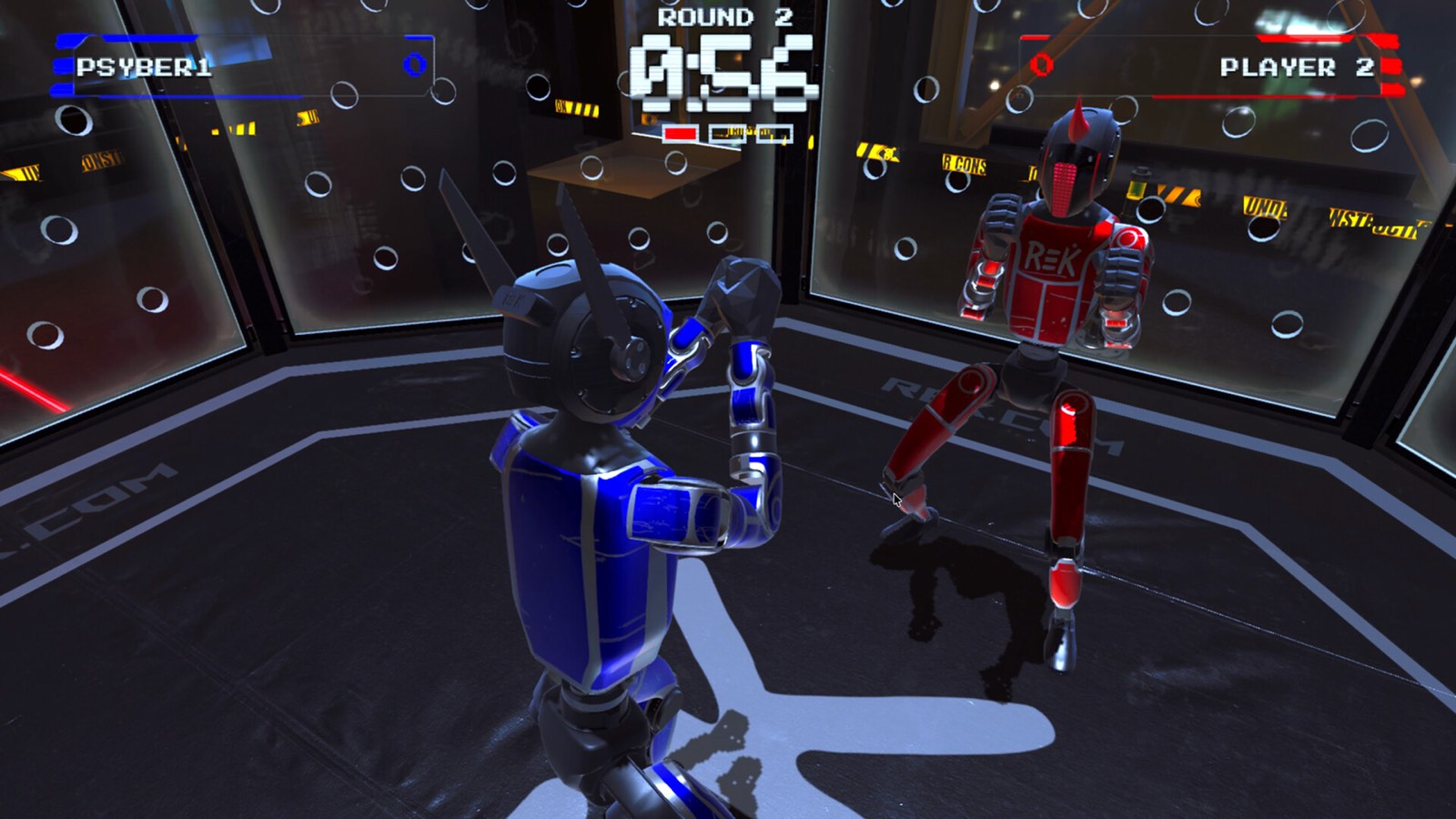
Online PvP in the sim. No canned animations - every punch, block, and stumble comes out of the physics and the robot’s own balance.
It runs on Steam (PC, Mac, Steam Deck) and on Meta Quest headsets, with cross-platform multiplayer between them. A practice arena covers the basics; a live championship arena handles matchmaking, scoring, and the leaderboard.
Fair fights: the server owns the physics
A lot of our work here is behind the scenes. Every match is run by a dedicated game server holding the single authoritative simulation, so both pilots are genuinely fighting the same fight - nobody gains an advantage from a faster machine or a better connection, and a Quest headset can face a PC on equal terms. Around it sits the backend that makes a championship possible: matchmaking and queueing, scoring, match records, and the global ladder.
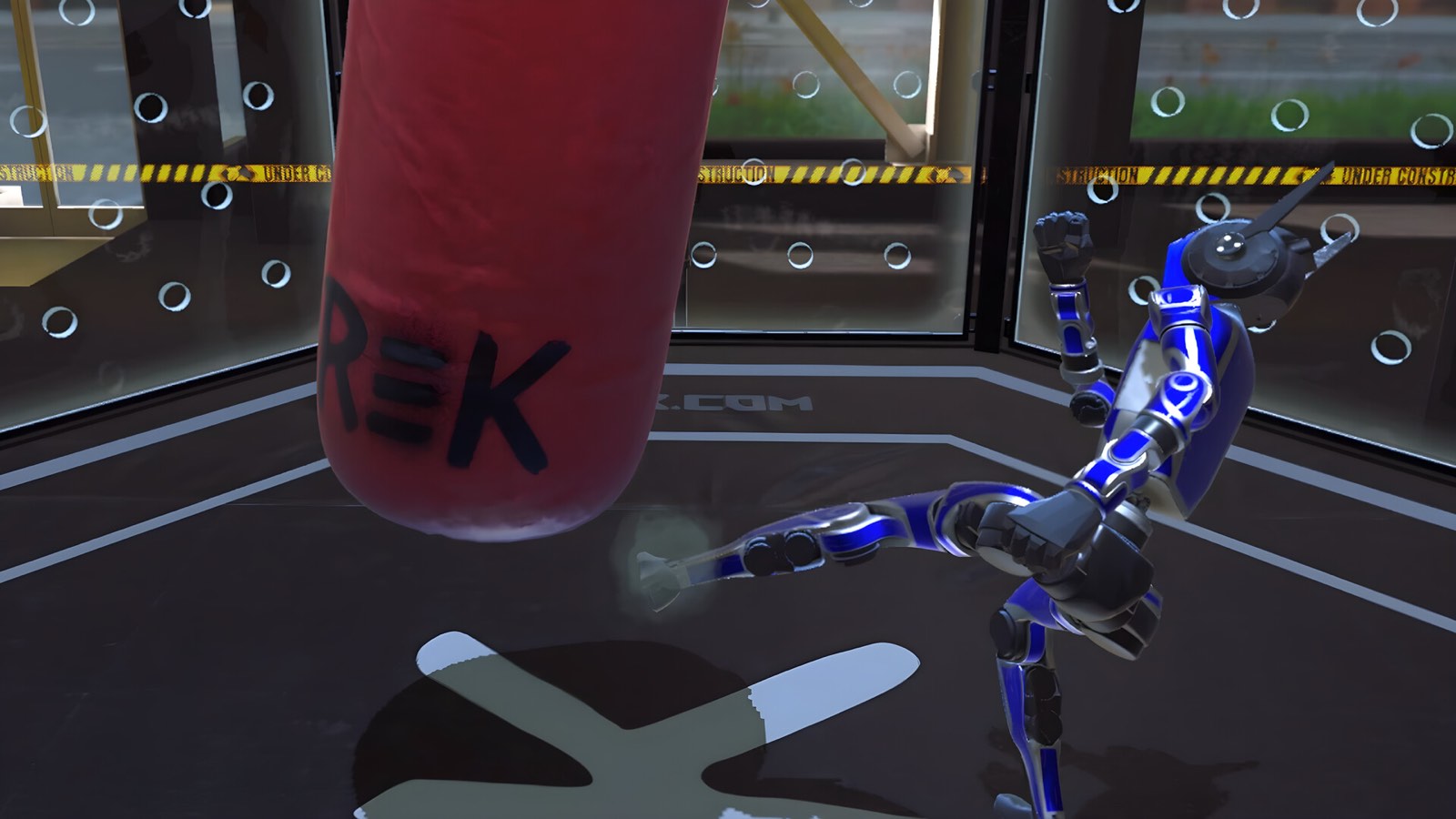
The practice arena - a recreation of REK’s San Francisco shop, where pilots get to grips with weight, momentum, and balance.
Championship weekends
The sim opened for a first public beta weekend with nearly 800 matches played. The first REK Arena Championship followed: 3,670 matches over a weekend, players all over the world, and a two-point gap at the top. Tactics emerged quickly - people found their own ways to score and counter.
The sim is a direct bridge to the live show: the winner earned a trip to San Francisco to pilot the real robots at the next event. It’s also a way to stress-test control approaches and gather data at scale before anything touches hardware.
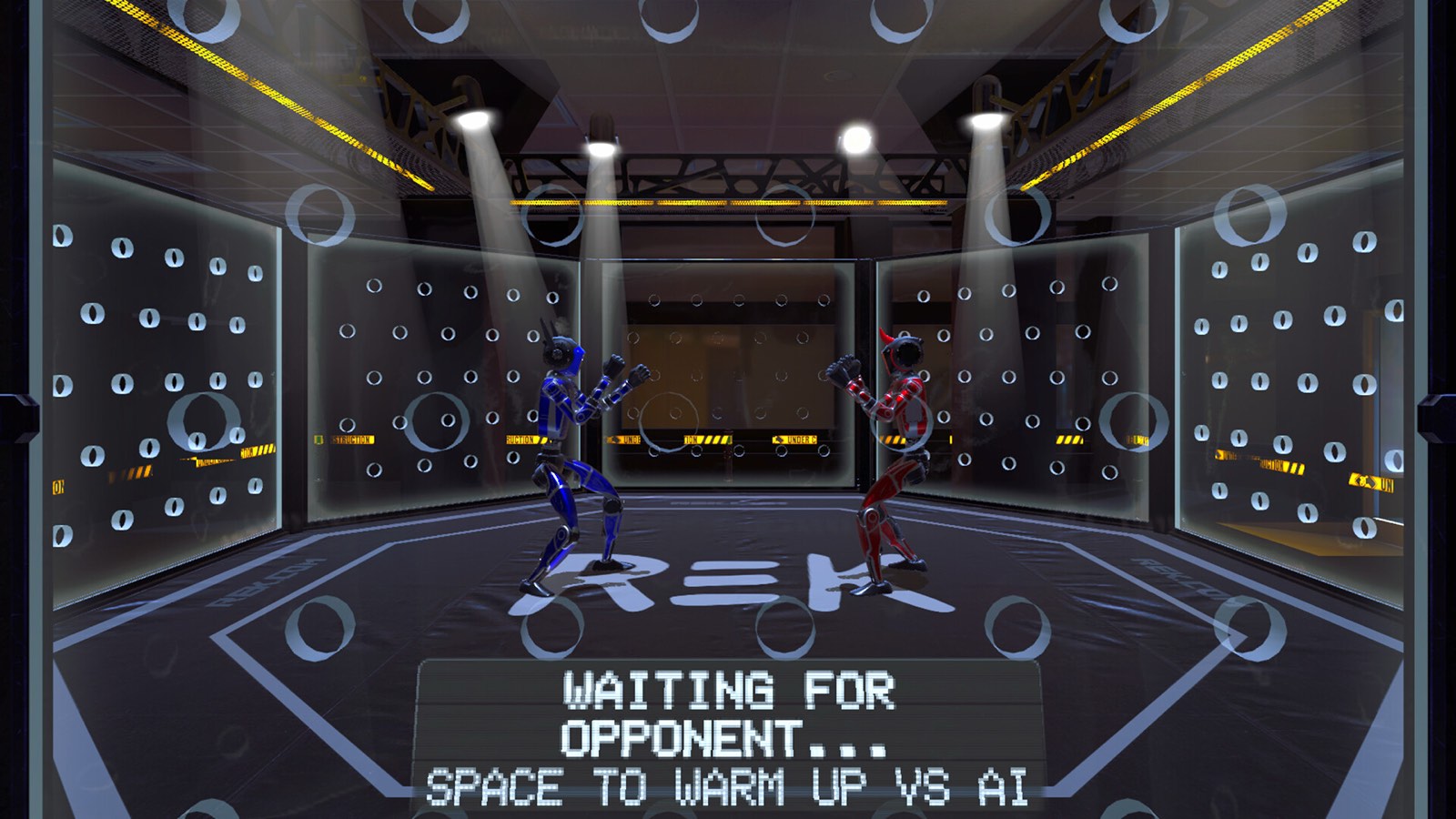
The championship arena, waiting for an opponent. Rounds are on the clock, every clean hit scores, and ties go to sudden death.
Play the sim
Online PvP, physics-based robot control, and cross-platform multiplayer. This is early alpha and built in public - expect rough edges, expect it to change.
Free on Steam and Meta Quest - links at the bottom of this page.
Talk: BEYOND Conference
Watch: REK0 (full event recording)
Full recording of REK0.
Want to jump straight in? Open at beginning of event on YouTube.
VR180 on Apple Vision Pro
REK0 is also available to watch in VR180 on Apple Vision Pro via Vantage VR. Watching in immersive video makes the crowd scale and ring depth come across far better than a flat stream - you'll feel like you were there - and you can clearly see the VR pilots controlling the robots.
Get the sim
Free, cross-platform, and still in early alpha. Pick your platform, or come and say hello on Discord.
- Steam - PC, Mac, and Steam Deck
- Meta Quest - public alpha
- Discord - the REK community
- REK Sim - more about the simulator


